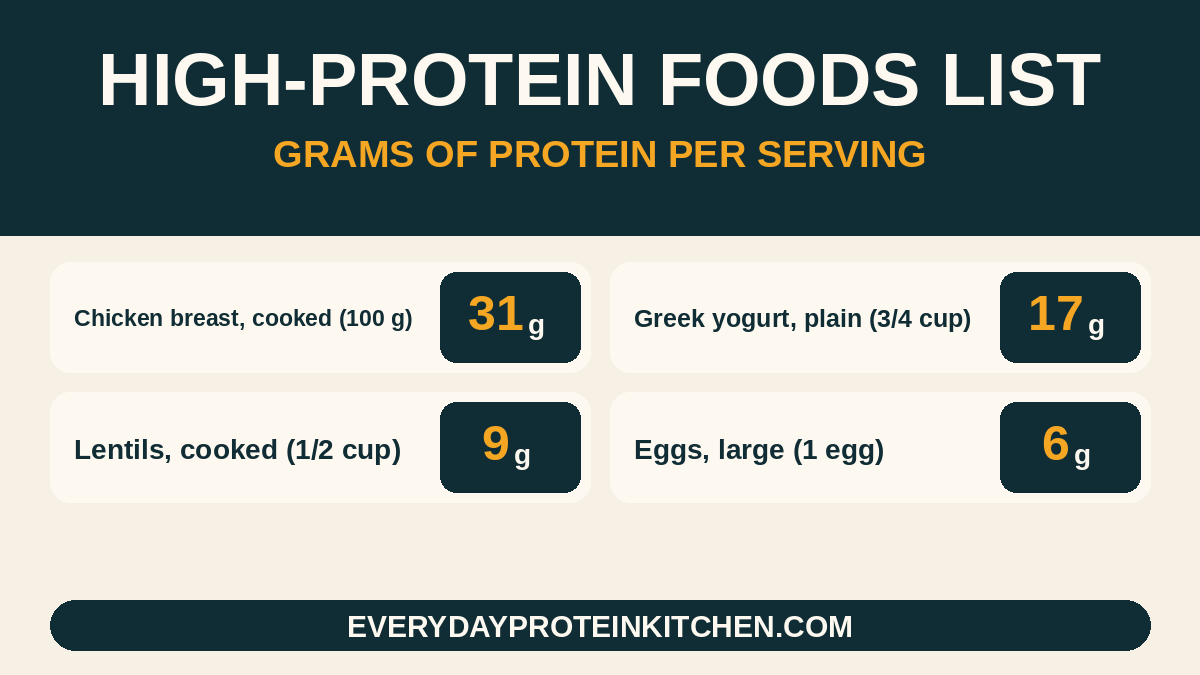
Most protein lists give you numbers per 100 grams and leave you to do the math. This one uses servings you would actually put on a plate or scoop into a bowl, so you can see at a glance where your protein is coming from. It is the reference page I use when I plan meals for the week.
Values are rounded from standard nutrition databases, and brands vary, so check the label on packaged foods. Weights are cooked unless the table says otherwise.
How to use this list
A useful rule of thumb is to build each meal around one main protein from the tables below and let vegetables, grains and fruit fill out the plate. Many people find that aiming for roughly 20 to 30 grams at a meal is easy to plan and easy to repeat. If you like exact numbers, a basic digital kitchen scale makes meat and fish portions simple to measure (affiliate link: as an Amazon Associate I earn from qualifying purchases). It is optional; every serving below also works with cups, spoons and pieces.
Meat, poultry and fish
| Food | Serving | Protein |
|---|---|---|
| Chicken breast, cooked | 100 g (3.5 oz) | about 31 g |
| Rotisserie chicken, meat only | 100 g (3.5 oz) | about 27 g |
| Turkey breast, roasted | 100 g (3.5 oz) | about 29 g |
| Lean ground beef (90%), cooked | 100 g (3.5 oz) | about 26 g |
| Salmon, cooked | 100 g (3.5 oz) | 22 to 25 g |
| Canned tuna, drained | 100 g (3.5 oz) | about 25 g |
| Shrimp, cooked | 100 g (3.5 oz) | about 24 g |
| Beef jerky | 30 g (1 oz) | about 10 g |
Eggs and dairy
| Food | Serving | Protein |
|---|---|---|
| Plain Greek yogurt | 3/4 cup (175 g) | about 17 g |
| Cottage cheese | 1/2 cup | about 12 g |
| Egg whites | 1/2 cup | about 13 g |
| Egg, large | 1 egg | about 6 g |
| Milk | 1 cup | about 8 g |
| Cheddar cheese | 30 g (1 oz) | about 7 g |
Beans, soy, nuts and seeds
| Food | Serving | Protein |
|---|---|---|
| Firm tofu | 100 g (3.5 oz) | about 10 g |
| Edamame, shelled and cooked | 1/2 cup | about 9 g |
| Lentils, cooked | 1/2 cup | about 9 g |
| Black beans, cooked | 1/2 cup | about 7 g |
| Chickpeas, canned | 1/2 cup | about 6 g |
| Pumpkin seeds | 1/4 cup | about 9 g |
| Almonds | 1/4 cup | about 7 g |
| Peanut butter | 2 tbsp | about 7 g |
Grains and pantry staples
These are smaller contributors on their own, but they add up across a day, and some pasta and grain swaps make a real difference.
| Food | Serving | Protein |
|---|---|---|
| Chickpea or lentil pasta, dry | 2 oz (56 g) | about 12 g |
| Quinoa, cooked | 1 cup | about 8 g |
| Rolled oats, dry | 1/2 cup | about 5 g |
| Whole wheat bread | 1 slice | about 4 g |
| Cooked rice | 1 cup | about 4 g |
Three easy 30-gram plates
Here is how the numbers above turn into real meals. Each one lands close to 30 grams of protein.
- Breakfast plate, about 29 g: 3 eggs (18 g), 1 slice of whole wheat toast (4 g) and 30 g of cheddar (7 g).
- Yogurt bowl, about 29 g: 3/4 cup plain Greek yogurt (17 g), 1/4 cup almonds (7 g) and 1/2 cup dry rolled oats stirred in or sprinkled on top (5 g).
- Chicken and rice, about 35 g: 100 g cooked chicken breast (31 g) with 1 cup cooked rice (4 g).
Frequently asked questions
How much protein do I actually need?
Protein needs depend on age, body size, activity level and health. For healthy adults, Health Canada’s Dietary Reference Intake sets a minimum of about 0.8 grams per kilogram of body weight per day. Some people, including very active people and older adults, may need more. A registered dietitian or your doctor can give you a number that fits you.
Are the numbers for raw or cooked food?
Cooked, unless the table says otherwise. Meat and fish lose water as they cook, so 100 g of cooked chicken breast comes from roughly 130 g raw. Weigh or measure after cooking so the numbers line up.
Do I need a food scale?
No. Most servings above are in cups, spoons or pieces. A kitchen scale only helps with meat and fish portions, where cooked weight is the easiest way to be accurate.
What are the best plant-based protein options?
Firm tofu, edamame, lentils, chickpeas, black beans, pumpkin seeds, peanut butter and quinoa are the most useful. Eating beans or lentils alongside grains such as rice or oats over the day covers the amino acids your body needs.
Put these numbers to work
Ready to turn the list into meals? Start with these pages: 15-minute high-protein dinners, 10 easy high-protein work lunches, quick weeknight dinner ideas, cheap high-protein meals on a budget, meal prep ideas for beginners and meal prep containers 101.
Simple meals, a grocery list, and prep tips for weeknight cooking.