A good salmon rice bowl should still taste like lunch tomorrow, not just look nice when it is freshly made. The trick is not complicated: cook the salmon gently, keep the rice from drying out, choose vegetables that can handle the fridge, and pack the sauce separately.
These high-protein salmon rice bowls are built for busy weeks, and the same high-protein salmon rice bowls format works for lunch or dinner. They give you tender salmon, rice that reheats cleanly, edamame for extra protein, crisp vegetables for freshness, and a lemon dill yogurt sauce that makes the bowl feel finished without turning it soggy.
This is not a bodybuilder meal or a tiny diet bowl. It is a practical lunch or dinner you can prep once and actually want to eat again.
Quick note: This bowl is written as practical cooking and meal-prep guidance, not personal medical advice. If allergies, medical conditions, or nutrition targets affect your meals, use a qualified professional for individual guidance.
Why salmon rice bowls work for meal prep
Salmon is rich enough that it does not need a heavy sauce to feel satisfying. Rice gives the bowl structure, edamame adds extra protein and texture, vegetables bring crunch, and a small container of sauce makes the whole thing taste fresh again when you open it later.
The main thing to watch is texture. Salmon can dry out if it is cooked too hard, rice can turn firm in the fridge, and watery vegetables can make the bowl soggy. This version is written around those real meal-prep problems.
If you are building a bigger dinner-prep system for a busy week, this bowl fits naturally next to The September Meal-Prep Reset because it gives you another protein-and-bowl option that can be cooked once and used for more than one meal.
High-Protein Salmon Rice Bowls Recipe
Recipe overview
Recipe name: High-Protein Salmon Rice Bowls for Meal Prep Servings: 2 bowls Prep time: 15 minutes Cook time: 12 minutes Total time: 27 minutes Course: Dinner, Lunch, Meal Prep Cuisine: American, Meal Prep Calories: About 620 per serving Protein: About 50 g per serving Carbohydrates: About 55 g per serving Fat: About 25 g per serving Fiber: About 7 g per serving
Nutrition is an estimate based on 12 oz raw salmon, 2 cups cooked rice, 1 cup shelled edamame, vegetables, and the full Greek yogurt sauce divided into 2 servings. Exact numbers will vary by ingredient brand and portion size.
Ingredients
Salmon
- 12 oz salmon fillet or salmon portions, skin removed if preferred
- 2 tsp olive oil
- 1 tsp lemon juice
- 1/2 tsp garlic powder
- 1/2 tsp smoked paprika
- 1/2 tsp fine salt
- 1/4 tsp black pepper
Bowls
- 2 cups cooked rice, white, jasmine, basmati, or brown rice
- 1 cup shelled edamame, cooked and cooled
- 1 cup cucumber, diced
- 1 cup shredded red cabbage or bagged coleslaw mix
- 1 medium carrot, shredded or cut into matchsticks
- 2 green onions, thinly sliced
- 1 tbsp sesame seeds, optional
- 1/2 avocado, sliced, optional
- Nori strips or pickled onions, optional
Lemon dill yogurt sauce
- 1/2 cup plain Greek yogurt, 2% or full-fat
- 1 tbsp lemon juice
- 1 tsp Dijon mustard
- 1 small garlic clove, grated or very finely minced
- 1 tbsp chopped fresh dill or parsley
- 1/4 tsp fine salt
- 1/8 tsp black pepper
- 1 to 2 tsp water, only if needed to thin
Instructions
1. Season the salmon
Heat the oven to 400°F. Line a small sheet pan with parchment paper.
Pat the salmon dry. Place it on the pan and rub it with olive oil, lemon juice, garlic powder, smoked paprika, salt, and black pepper.
2. Bake until just cooked
Bake the salmon for 10 to 14 minutes, depending on thickness, until it flakes easily with a fork and is just cooked through. Try not to overbake it. Meal-prep salmon tastes better when it stays tender instead of dry.
Let the salmon rest for 5 minutes, then flake it into large pieces or keep it in portions.
3. Make the sauce
In a small bowl, stir together Greek yogurt, lemon juice, Dijon mustard, garlic, dill or parsley, salt, and pepper. Add 1 to 2 teaspoons of water only if you want a thinner drizzle.
If you are packing the bowls for later, keep the sauce in a separate small container.
4. Build the bowls
Divide the cooked rice between 2 bowls or meal-prep containers. Add the salmon, edamame, cucumber, cabbage, carrot, and green onion.
Top with sesame seeds, avocado, nori strips, or pickled onions if using.
If eating right away, spoon the sauce over the bowls. If meal prepping, pack the sauce separately and add it after reheating or right before eating.
5. Store for meal prep
Cool the salmon before closing the containers. Refrigerate the bowls promptly in airtight containers.
For best quality, eat within 3 days. Keep sauce separate until serving.
Printable recipe card

High-Protein Salmon Rice Bowls for Meal Prep
Ingredients
Equipment
Method
- Heat the oven to 400°F. Line a small sheet pan with parchment paper. Pat the salmon dry. Place it on the pan and rub it with olive oil, lemon juice, garlic powder, smoked paprika, salt, and black pepper.
- Bake the salmon for 10 to 14 minutes, depending on thickness, until it flakes easily with a fork and is just cooked through. Try not to overbake it. Let the salmon rest for 5 minutes, then flake it into large pieces or keep it in portions.
- In a small bowl, stir together Greek yogurt, lemon juice, Dijon mustard, garlic, dill or parsley, salt, and pepper. Add 1 to 2 teaspoons of water only if you want a thinner drizzle. If packing the bowls for later, keep the sauce in a separate small container.
- Divide the cooked rice between 2 bowls or meal-prep containers. Add the salmon, edamame, cucumber, cabbage, carrot, and green onion.
- Top with sesame seeds, avocado, nori strips, or pickled onions if using. If eating right away, spoon the sauce over the bowls. If meal prepping, pack the sauce separately and add it after reheating or right before eating.
- Cool the salmon before closing the containers. Refrigerate the bowls promptly in airtight containers. For best quality, eat within 3 days. Keep sauce separate until serving.
Notes
Air fryer option
If you prefer the air fryer, cut the salmon into larger chunks, season the same way, and air fry at 390°F for about 6 to 8 minutes, depending on the size of the pieces.
For a more detailed salmon air-fryer method, use the timing logic from Delicious Air Fryer Salmon Bites for Busy Weeknights and keep the pieces a little larger for meal prep so they do not dry out as quickly.
If salmon is not what you have this week, the same bowl structure also works with Air Fryer Chicken Breast for Quick High-Protein Dinners: rice, vegetables, sauce on the side, and a protein that reheats cleanly.
How to keep salmon rice bowls from getting soggy
Pack the bowl in layers that match how you plan to eat it.
If you will reheat the bowl, keep rice and salmon together, then add cold vegetables and sauce after warming.
If you will eat the bowl cold, let the rice and salmon cool first, then pack everything with the sauce on the side.
The biggest mistake is pouring the sauce over the bowl before storing it. The flavor is good, but the vegetables soften and the rice absorbs too much moisture.
Best vegetables for salmon rice bowls
Use vegetables that either stay crisp cold or reheat without turning watery.
Good cold vegetables:
- Cucumber
- Shredded cabbage
- Carrots
- Bell pepper
- Radish
- Green onion
Good warm or reheatable vegetables:
- Roasted broccoli
- Green beans
- Asparagus
- Zucchini, if cooked separately and not overpacked
- Roasted peppers
Edamame is especially useful because it adds color, texture, and extra plant-based protein without much extra work.
Sauce variations
Soy-lime sesame sauce
For a different bowl, swap the lemon dill sauce for a soy-lime version:
- 1 tbsp soy sauce or tamari
- 1 tbsp lime juice
- 1 tsp sesame oil
- 1 tsp honey or maple syrup
- 1 tsp grated ginger
- 2 tbsp Greek yogurt or mayo, optional for creaminess
Spicy yogurt sauce
Mix Greek yogurt with a small amount of sriracha or chili garlic sauce, lime juice, garlic, and a pinch of salt. Keep it mild if you are packing the bowl for work and do not want lunch to feel too heavy.
Lemon herb sauce
Use the main sauce but swap dill for parsley, chives, cilantro, or whatever soft herbs you already have.
How to store and reheat
Cooked salmon is best used within 3 days when stored properly in the refrigerator. Use clean airtight containers and refrigerate promptly.
To reheat, warm the rice first with a small splash of water. Add the salmon near the end or heat it gently at lower power so it does not turn dry. Add cold vegetables and sauce after reheating.
If you prefer cold salmon bowls, pack them like a salad bowl: cooled rice, cooled salmon, crunchy vegetables, and sauce on the side.
For weeks when you want a mostly hands-off protein that can stretch into several dinners, pair this kind of bowl planning with Slow Cooker High-Protein Dinners so you have both a fish option and a slow-cooker option in the same meal-prep week.
Budget swaps
Fresh salmon can be expensive, so this bowl still works with frozen salmon portions, canned salmon, or cooked salmon leftovers.
For canned salmon, drain it well and mix it with a spoonful of the yogurt sauce before adding it to the bowl. It becomes more of a salmon salad rice bowl, which is still practical for work lunches.
If salmon is not in the budget this week, use the same format with chicken from a simple chicken and rice bowl variation or with leftovers from a simple sheet-pan dinner.
What to serve with salmon rice bowls
These bowls are filling on their own, but they also work with:
- Extra roasted vegetables
- A simple side salad
- Fruit on the side
- Cottage cheese or Greek yogurt if you need a bigger lunch
- Soup if you are using the bowl for dinner
For more packable lunch structure, add this to a rotation with packable high-protein lunch ideas and filling high-protein salad ideas.
FAQ
Can I eat salmon rice bowls cold?
Yes, as long as the salmon was cooked, cooled, stored properly, and kept refrigerated. Cold salmon bowls are often better with crisp vegetables and sauce added right before eating.
How long do salmon rice bowls last in the fridge?
A conservative guideline is up to 3 days for cooked salmon when stored in airtight containers in the refrigerator. If anything smells off or the texture seems wrong, do not eat it.
Can I use canned salmon?
Yes. Canned salmon works well for a budget version. Drain it, mix it with a little sauce, and build the bowl with rice, vegetables, and toppings.
What rice works best?
White rice, jasmine rice, basmati rice, brown rice, and short-grain rice all work. For meal prep, slightly firmer rice usually holds up better than very soft rice.
How much protein is in each bowl?
When made with 6 oz raw salmon per serving, 1/2 cup edamame, 1 cup cooked rice, vegetables, and half the Greek yogurt sauce, each bowl has about 50 g protein. Treat that as an estimate, not a lab-tested number.
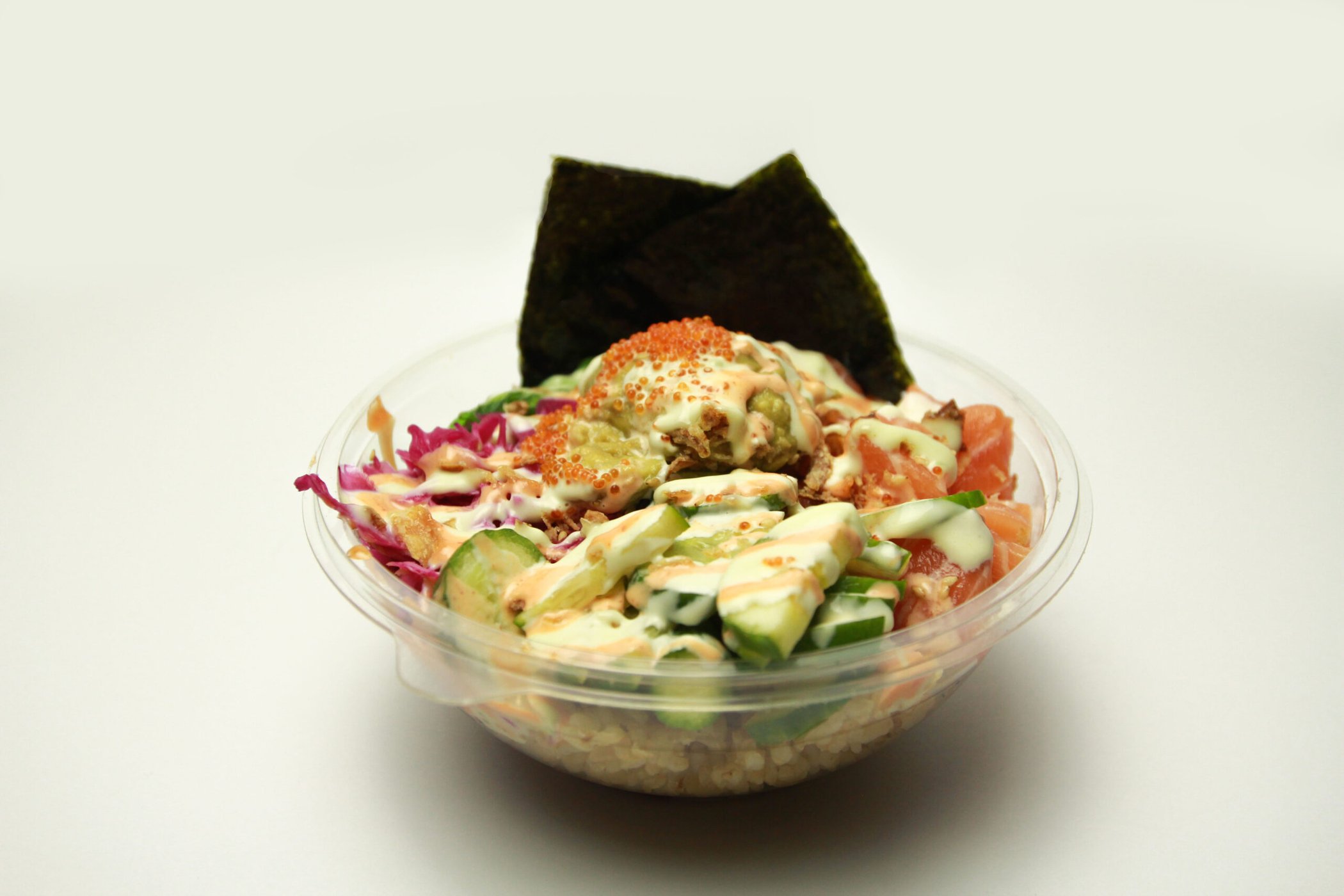
Featured image credit: “Miso Maple Glazed Salmon Rice Bowl” by OriginalJo, licensed under CC BY 2.0 via Flickr/Openverse.
Simple meals, a grocery list, and prep tips for weeknight cooking.