High-protein smoothies only help if they are fast enough to make on a normal morning. This structure keeps the blender routine short: one protein, one fruit, one liquid, and one extra for flavor or texture.
Why it works
A two-minute smoothie works because the formula is repeatable. You are not rebuilding breakfast from scratch every day. It can sit next to overnight oats, an overnight smoothie, or protein snacks that actually taste good when you need a quick option without turning the morning into a project.
Why ingredient order actually matters
Adding liquid first isn’t just a habit — it keeps thicker ingredients like yogurt or cottage cheese from sticking to the blades and forming an unblended pocket at the bottom. If a smoothie keeps coming out chunky in the same spot, that’s usually the fix, not a stronger blender.
Ingredients
- Protein: 3/4 to 1 cup Greek yogurt, cottage cheese, kefir, Fairlife milk, regular milk, or protein powder if you already use it
- Fruit: 1 banana or 1 cup frozen berries, mango, pineapple, peaches, or cherries
- Liquid: 1/2 to 1 cup milk, kefir, or unsweetened almond milk
- One extra: 1 tablespoon peanut butter, 1 tablespoon cocoa, 2 tablespoons oats, cinnamon, vanilla, chia, or cooled coffee
- Optional: ice if the fruit is fresh instead of frozen
Step-by-step
- Add the liquid first so the blender catches quickly.
- Add protein, fruit, and one flavor extra.
- Blend for 30 to 60 seconds until smooth.
- If it is too thick, add a splash of liquid. If it is too thin, add a few frozen berries or ice.
- Drink right away or pour into a covered cup for a short commute.
Printable recipe card
Use the card below for the smoothie formula, portion amounts, and quick variation ideas.
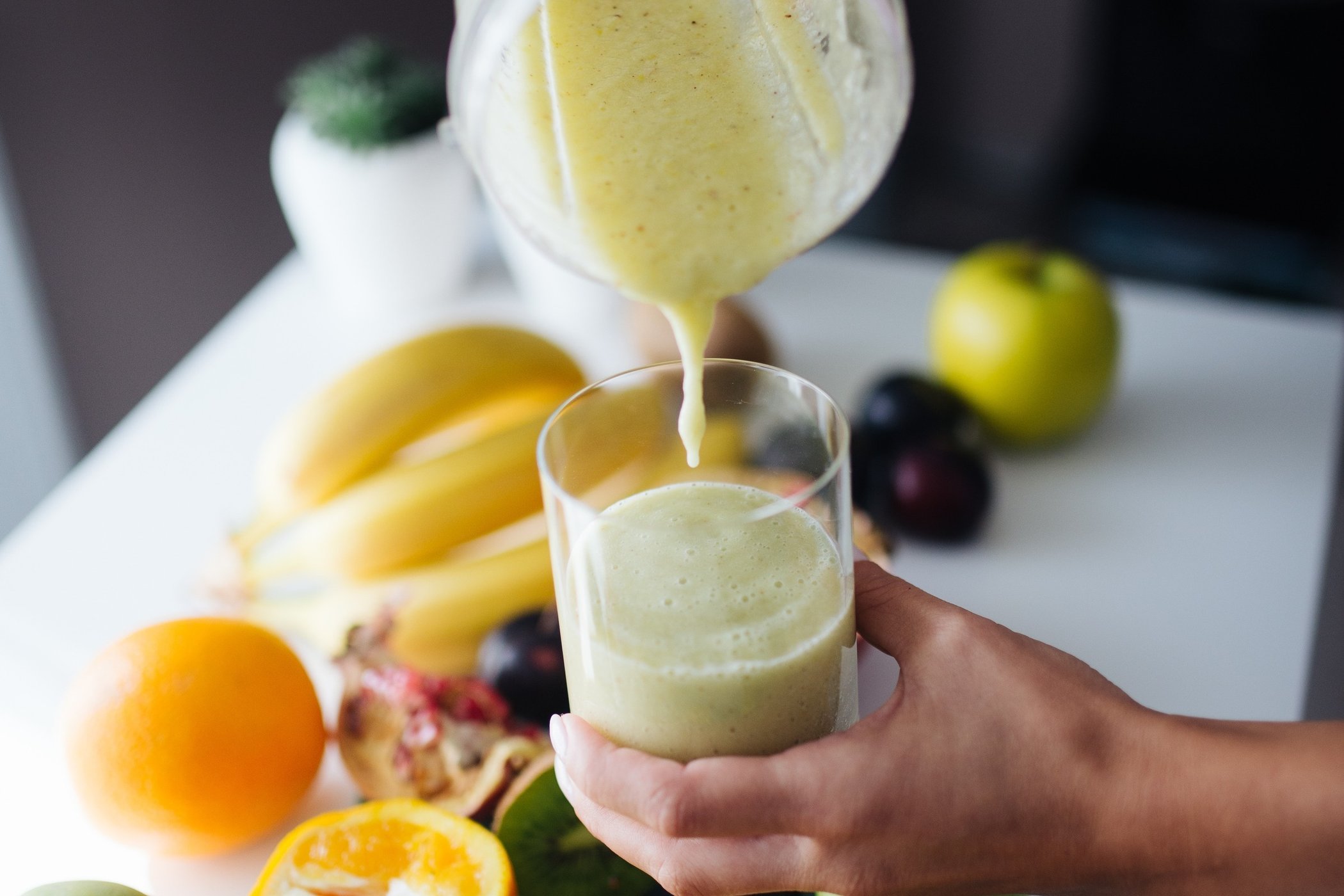

Two-Minute High-Protein Smoothie Formula
Ingredients
Method
- Add the liquid to the blender first.
- Add the protein, fruit, and one flavor or texture extra.
- Blend until smooth, about 30 to 60 seconds.
- If too thick, add a splash of liquid; if too thin, add frozen fruit or ice.
- Drink right away or pour into a covered cup and keep cold.
Notes
Five flavor combinations
Peanut butter banana — 1 banana, 3/4 cup Greek yogurt, 1 tablespoon peanut butter, 1/2 cup milk. Estimated protein: roughly 27g.
Chocolate peanut butter — 3/4 cup cottage cheese, 1 tablespoon cocoa powder, 1 tablespoon peanut butter, 1 cup milk, ice. Estimated protein: roughly 30g.
Berry and yogurt — 1 cup frozen mixed berries, 3/4 cup Greek yogurt, 1/2 cup milk. Estimated protein: roughly 22g.
Mango and cottage cheese — 1 cup frozen mango, 3/4 cup cottage cheese, 1/2 cup milk or orange juice. Estimated protein: roughly 25g.
Coffee protein smoothie — 1/2 cup cooled brewed coffee, 3/4 cup Greek yogurt, 1 banana, ice. Estimated protein: roughly 24g.
Storage/reheating
Smoothies are best fresh, but you can prep freezer packs with fruit and extras, then add protein and liquid when blending. If storing a blended smoothie, keep it cold and shake before drinking. For more easy meal support, pair smoothies with no-cook protein snacks, high-protein snack boards, cheap high-protein breakfasts, and breakfasts without eggs.
For basic food safety, keep dairy-based high-protein smoothies cold and follow cold food storage guidance if you prep ingredients ahead.
Keeping it budget-friendly
Frozen fruit is usually cheaper than fresh and doubles as the ice, which keeps the ingredient list short. Buying plain Greek yogurt or cottage cheese in a larger tub instead of single-serve cups is a straightforward way to bring the per-smoothie cost down without changing the recipe.
FAQ
Can a smoothie be filling enough for breakfast?
It can be, especially when it includes a clear protein source and something with texture or staying power, like oats, peanut butter, chia, or Greek yogurt.
Do I need protein powder?
No. Greek yogurt, cottage cheese, kefir, and milk can all do the job without a supplement.
How do I make smoothies less icy?
Use half frozen fruit and half fresh fruit, or add Greek yogurt for a creamier texture.
Can I use regular yogurt instead of Greek yogurt?
Yes, though regular yogurt is thinner and lower in protein, so the smoothie will be a bit looser and slightly less filling. Using less liquid can help offset the thinner texture.
Is it cheaper to make these than buy pre-made protein shakes?
Usually, especially if you’re already buying Greek yogurt, cottage cheese, or milk for other meals — the marginal cost per smoothie is mostly just the fruit.
Simple meals, a grocery list, and prep tips for weeknight cooking.