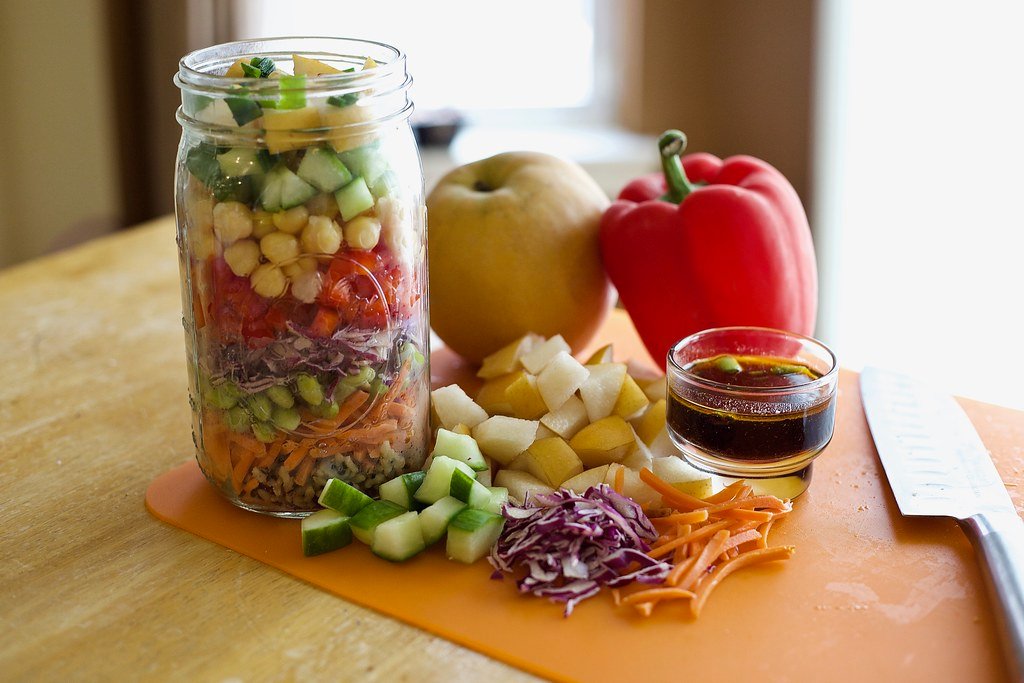
Wide-mouth mason jars are useful for protein-packed lunches because they keep layered meal prep easy to grab on busy days. A good mason jar meal should be sturdy, filling, and built so the ingredients still taste good when you open it later.
Why mason jar meals work
They help with portioning, visibility, and convenience. You can see what is inside, make several at once, and keep lunches ready without separate containers for every ingredient. They are especially good for office lunches, quick grab-and-go meals, and fridge-friendly prep for a few days ahead.
How to layer them better
- Dressing or wet ingredients on the bottom
- Heavier vegetables or beans next
- Main protein in the middle
- Greens or delicate toppings closer to the top
- Crunchy toppings added last minute if needed
This order helps stop sogginess and makes the jar easier to shake or pour into a bowl when you are ready to eat.
The five jars, with amounts
Chicken, grain, and vegetable jar — 3/4 cup cooked rice or quinoa, 4 oz diced chicken, 1 cup chopped vegetables, dressing on the bottom. Estimated protein: roughly 33g.
Tuna, white bean, and cucumber jar — 1 can tuna (drained), 1/2 cup white beans, 1/2 cup chopped cucumber, a simple lemon-olive oil dressing. Estimated protein: roughly 35g.
Chickpea, feta, and pepper jar — 3/4 cup chickpeas, 1/4 cup crumbled feta, 1/2 cup chopped bell pepper, olive oil and herbs. Estimated protein: roughly 20g.
Turkey, pasta, and yogurt-dressing jar — 3/4 cup cooked pasta, 4 oz diced turkey, chopped vegetables, and a yogurt-based dressing. Estimated protein: roughly 32g.
Egg, potato, and greens jar — 2 chopped hard-boiled eggs, 1/2 cup diced roasted potato, a handful of greens, dressing on the bottom. Estimated protein: roughly 15g.
How to keep them practical
The easiest mason jar meals use leftovers or repeat ingredients from the rest of the week. Do not build each jar from a different recipe. Pick one protein, one starch or bean, a few vegetables, and one dressing. That is enough variety without creating extra work.
Budget and storage notes
Jar meals are budget-friendly when they rely on chicken, beans, eggs, cooked grains, and chopped vegetables already in the fridge. They also help reduce waste because small leftovers can become a full lunch instead of sitting untouched until they get thrown out.
If you are making several jars, label the ones with delicate ingredients so they get eaten first.
The mason jar layering method
Mason jar meals work because the wet ingredients stay at the bottom and the delicate ingredients stay dry until lunch. The order matters: dressing first, sturdy vegetables next, grains or beans in the middle, protein above that, and greens or crunchy toppings at the top.
- Bottom: dressing, salsa, yogurt sauce, vinaigrette, or hummus thinned with lemon.
- Sturdy layer: cucumbers, carrots, cabbage, peppers, chickpeas, beans, corn, or cooked potatoes.
- Middle: rice, quinoa, pasta, lentils, chicken, tofu, tuna, turkey, or edamame.
- Top: greens, herbs, seeds, nuts, crackers, or croutons packed separately if needed.
Five useful jars are chicken Caesar pasta salad, chickpea Greek quinoa, tuna white bean lemon dill, tofu peanut noodle, and turkey taco rice. Each one can be shaken into a bowl or poured onto a plate when you are ready to eat.
Storage and serving tips
Most jars keep 3 to 4 days if the greens are dry and the dressing stays at the bottom. If you are using avocado, add it the morning of. If you are using crunchy toppings, pack them separately. Wide-mouth jars are easier to fill, empty, and clean than narrow jars.
For bigger appetites, pack a side of fruit, yogurt, crackers, or pita. The jar should be convenient, not tiny; use a larger jar or container if you need a more filling lunch.
FAQ
Do I eat mason jar meals from the jar?
You can, but they are usually easier to eat after shaking and pouring into a bowl or onto a plate.
What size jar is best?
A wide-mouth 24- to 32-ounce jar works well for most lunch salads and bowls.
Can I use warm ingredients?
Cool cooked grains and proteins before layering so steam does not wilt the greens.
How long each style actually lasts
Jars built around sturdier ingredients — beans, grains, roasted vegetables, pasta — generally keep well for 4–5 days. Jars with delicate greens or fresh herbs are better eaten within 2–3 days, since the greens closest to the lid are the first to wilt. This is also why the layering order matters: greens packed at the very top, away from the dressing, buys extra time even in a jar you’re not planning to eat right away.
A dressing that holds up in a jar
A simple lemon-olive oil dressing — 2 tablespoons olive oil, 1 tablespoon lemon juice, salt, and pepper, whisked together — works underneath almost any of the combinations above and doesn’t break down or separate the way creamier dressings can after a day or two. For a creamier option, a mix of 2 tablespoons plain Greek yogurt with a little lemon juice and garlic holds up nearly as well and adds a bit more protein.
Simple meals, a grocery list, and prep tips for weeknight cooking.